
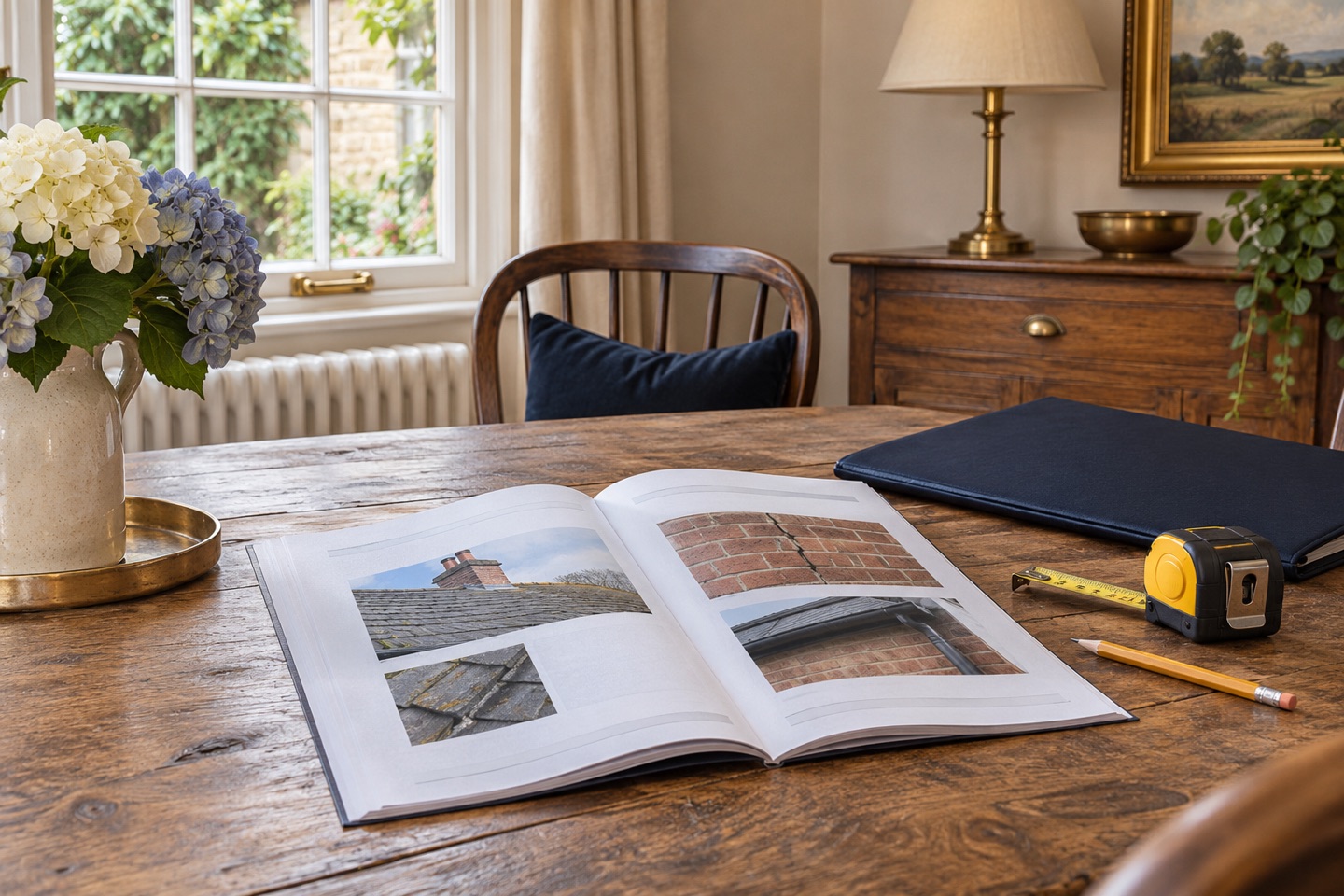
A buyer asking to renegotiate after a house survey can feel like a setback. Before responding, find out what the survey has identified, what evidence supports the request and what outcome the buyer is seeking. A calm, specific discussion is more useful than agreeing or refusing a reduction on the spot.
Start with the findings, not just the new price
Ask your estate agent to obtain the relevant survey extracts and a clear list of the concerns behind the request. Is the buyer worried about a confirmed defect, a recommendation for further investigation or routine maintenance? Those are different questions and may need different responses.
For example, a recommendation to investigate a roof does not, by itself, establish that the whole roof needs replacing. Where the scope is uncertain, a suitably qualified specialist can help establish what work is actually needed.
Compare repair estimates on the same basis
If repair costs are being used to justify a lower offer, ask what the estimate includes. Access, scaffolding, materials, labour and VAT can affect the total. Check whether a figure covers essential repairs or an upgrade the buyer would prefer.
Consider obtaining an independent quotation where access and timing allow. Avoid treating either the highest or lowest estimate as the answer without understanding its scope. Do not promise to carry out work until the specification, timing and any required professional advice are clear.
Consider the available responses
You may decide to maintain the agreed price, propose a different reduction, seek more information or discuss repairs. The appropriate response depends on the evidence, the price already agreed and your priorities. A survey does not create an automatic discount.
Think about the whole move: your onward purchase, the buyer's readiness, the likely delay and the uncertainty of returning to the market. These considerations can help you decide, but they should not pressure you into a figure you cannot afford.
Keep negotiations organised
Ask your agent to bring the outstanding concerns together so you can consider them as a whole. Respond to specific points, keep a written record and make clear whether any proposal depends on further information. Avoid making several separate concessions before the full request is understood.
If a revised price or repairs are agreed, tell your conveyancer promptly. The buyer should also discuss changes with their lender where relevant. Your agent can coordinate communication; your conveyancer handles the legal implications.
Does accepting an offer make the sale binding?
In England and Wales, an accepted offer is not legally binding until contracts are exchanged. If exchange has already taken place, seek advice from your conveyancer before responding to a request to change the agreement. GOV.UK explains offers and negotiations.
Prepare useful paperwork early
Keep relevant guarantees, invoices and certificates for completed work together. These may help answer questions about previous repairs, although they do not replace an inspection or prove that a current concern is resolved. Our selling paperwork checklist is a useful starting point.
Your next step
If you are preparing to sell in Oxfordshire or Buckinghamshire, Home & Castle can help you plan the marketing and discuss how offers will be handled. Arrange a free, no-obligation property valuation.
For the wider process, read what happens after accepting an offer and how to compare offers on your home.
This guide covers general selling considerations in England. Ask your conveyancer about your contract and a qualified surveyor or specialist about building defects.
Cover image: an AI-generated illustration of survey paperwork, not a photograph of a client property.